UNESCO MAB. Digital Platform for Environmental Program Management

Period
Dec 2024 - Feb 2025
Lead Designer
Relief Applications
Me (Lead UI/UX Designer) , Olha P (UI Designer), Luna D (Project Manager), Cyril D (UX Researcher), Matthias D (Lead Developer), 4 Awesome Developers
B2B, IM Management
Problem
design a scalable digital platform that streamlines complex environmental workflows and fosters intuitive collaboration between national authorities and governing bodies?
Solution
Designed a comprehensive digital platform that centralizes and streamlines the UNESCO MAB reporting process, replacing inefficient paperwork with a structured, role-based workflow. The solution facilitates seamless collaboration among governing bodies and automates large-scale data processing, delivering a highly intuitive experience for diverse user roles within a short development timeframe.
How I Researched it
Research
The research conducted for the project concentrated on the three core investigative phases:
Audit of Existing Submitted Forms: Analyzed content, field consistency, common errors, and structural gaps within existing submissions. I used AI to accelerate the initial pass — processing large volumes of form data to surface recurring error patterns and field inconsistencies across submissions.
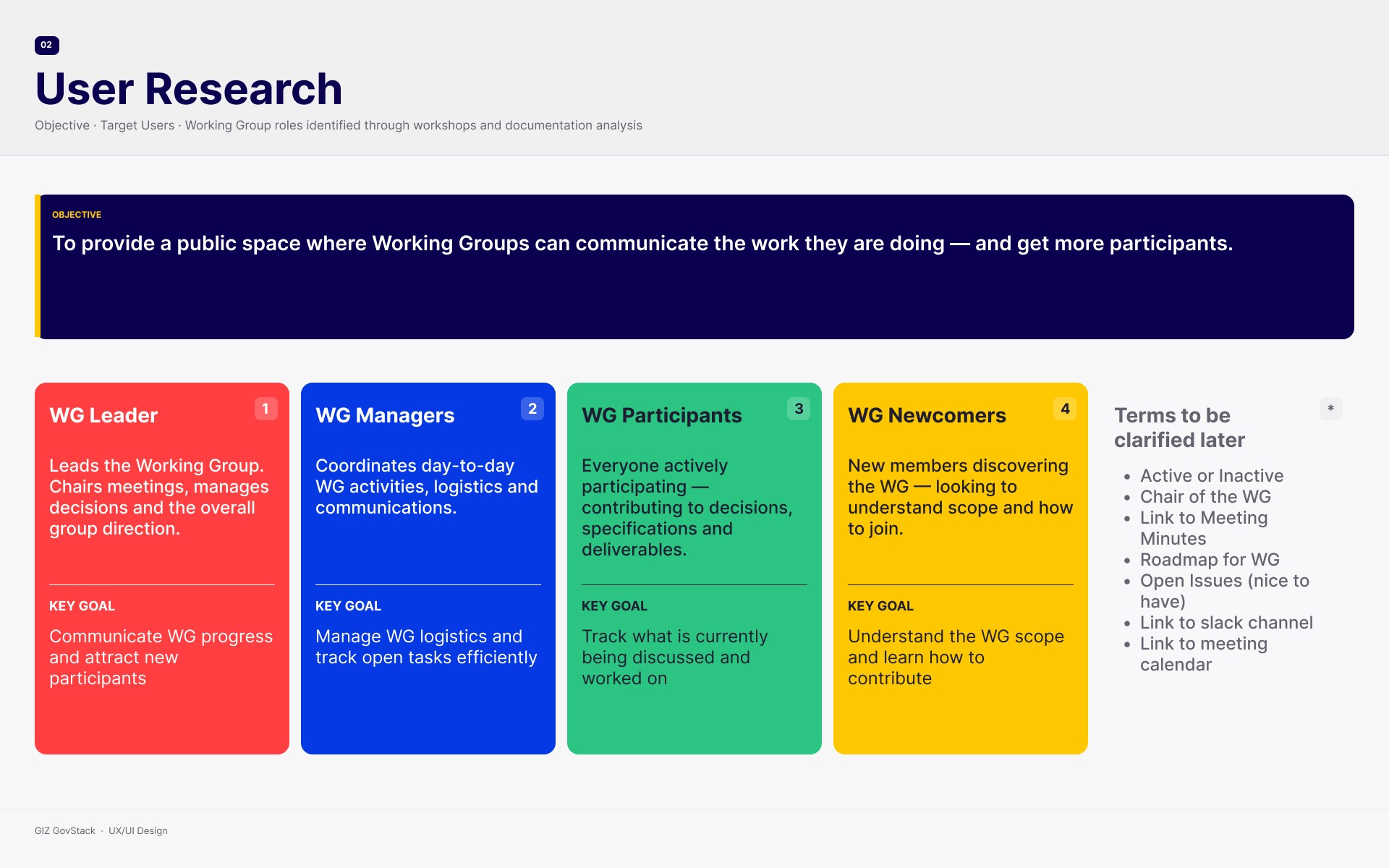
Review of Documentation: Conducted detailed process mapping to define roles, approval rules, compliance requirements, and data dependencies. Given the volume and complexity of UNESCO's official documentation, I used AI to extract and structure the process logic: mapping approval chains, role permissions, and data dependencies into a working model I could validate with stakeholders.
MAB Secretariat Interviews: Carried out interviews to clarify decision-making, uncover informal steps, identify bottlenecks and edge cases, map manual workarounds, and gather actionable process improvement ideas.


Technical Constraints
For the UNESCO MAB project, the platform was built on Oort , a no-code system that introduced specific design constraints. While Oort enabled faster development and scalability, it limited layout flexibility, custom interactions, and component variation. This required a design approach focused on clarity, prioritization, and reuse of existing system components, as well as close collaboration with developers to ensure that complex approval workflows could be implemented within the platform’s technical boundaries without compromising usability.

How I Designed it
User flow
I transformed extensive client documentation into a streamlined digital ecosystem by mapping complex interactions for four different user roles to ensure precise access levels and permissions. Before moving to Figma, I used AI to rapidly generate and compare alternative permission models, testing different access hierarchy structures against the documented rules to identify contradictions and gaps. With four roles and two core workflows, the number of possible interaction combinations was large; AI helped me reason through edge cases and flag ambiguities before they became design problems downstream. Focusing on two core workflows: application submissions and periodic reviews. I created this visual logic to align stakeholder expectations across multi-stage approval processes. This specific flow represents a modular segment of a much larger architecture designed to handle large-scale data processing while maintaining a user-friendly experience for governing bodies.



Wireframes
Per Role
To bridge the gap between complex client documentation and a functional interface, I employed a highly iterative design process centered on four primary user roles: the Bio Reserve Manager, Reviewer, National Commission, and MAB Secretariat. I conducted frequent feedback sessions with the client and integrated developers from the early stages to rigorously validate the technical feasibility of complex data processing and multi-stage approval workflows. Following usability testing, I developed comprehensive wireframe sets for each role, ensuring that distinct permission levels and dashboard requirements from document tracking to collaborative commenting were intuitively addressed within the platform’s architecture.


Design system
I used the UNESCO Design System to keep the platform’s look consistent and professional. Using these ready-made components helped me design faster while meeting global standards for trust and accessibility.

Iterations
Through several rounds of proxy user testing with MAB Secretariat members, the dashboards were iteratively refined to better match real workflows and decision points. Feedback revealed where information hierarchy was unclear, where users struggled to locate relevant submissions, and which status indicators were missing or confusing. Based on these insights, the design evolved to simplify layout, clarify status visibility, and highlight the most critical actions for each role, resulting in dashboards that more effectively supported monitoring, review, and coordination tasks.


Web App
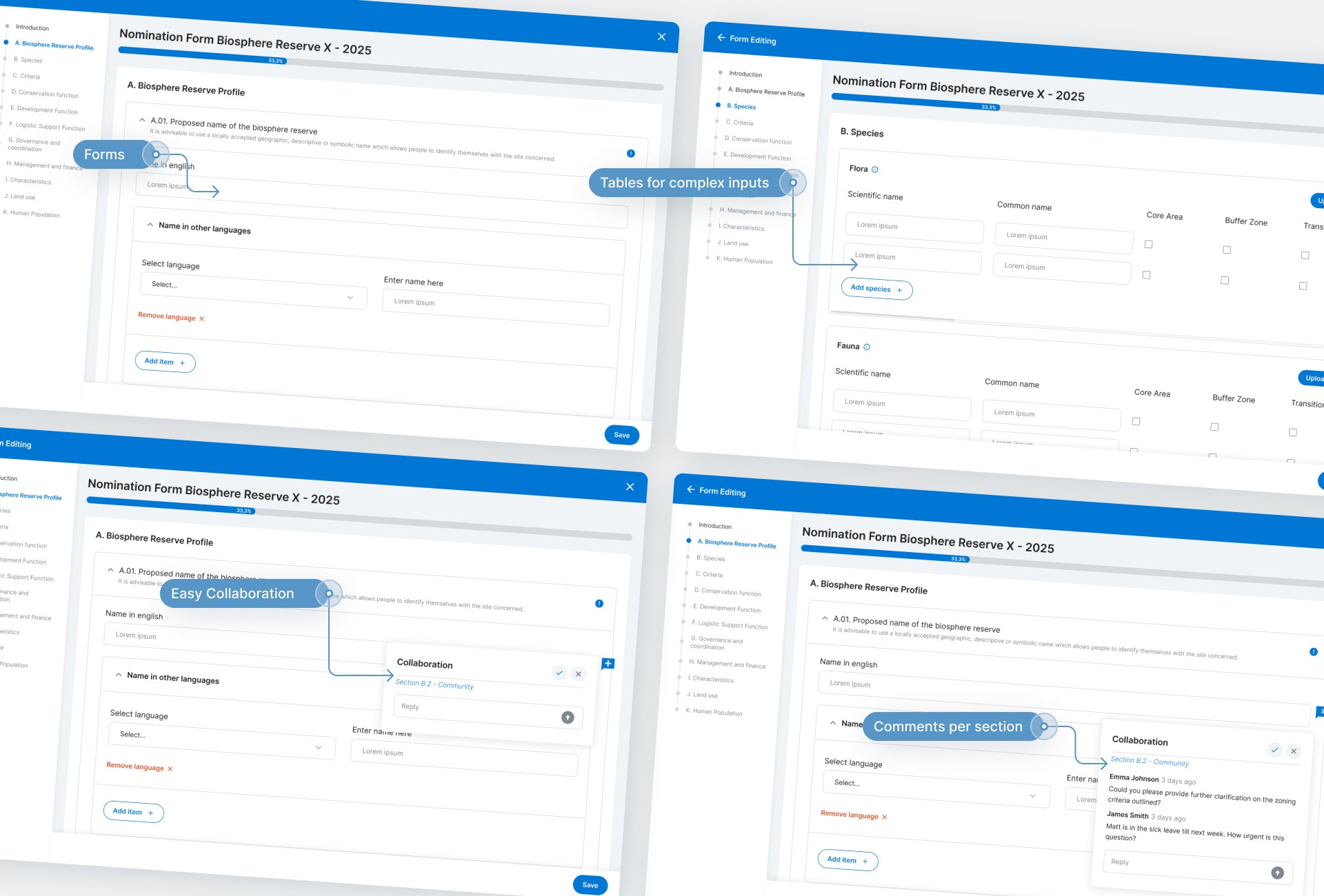
Building upon the UNESCO design system, I developed the final platform with a focus on high-density data management and real-time collaboration between the four primary user roles. I designed modular dashboards that centralize submission tracking and important deadlines, ensuring that stakeholders can easily manage complex periodic reviews and application forms within a single interface. To solve the communication barriers identified in our research, I integrated a contextual commenting system for easy collaboration directly within the documentation flow. Every element, from the interactive bioreserve maps to the role-specific collapsible menus, was refined through continuous client feedback to ensure the final product was both technically feasible and intuitive for high-stakes environmental reporting.




Outcome
By the end of the project, we delivered a highly functional and structured platform that addressed the core challenges faced by users.
To illustrate the impact of the UNESCO MAB platform, I have outlined the measured outcomes and anticipated improvements based on our research and the final design metrics:
Measured Outcomes & Impact Mapping
The transition from a fragmented, paper-based process to this centralized digital ecosystem is expected to deliver the following key results:
Improved Operational Efficiency: Streamlined internal workflows for governing bodies will reduce the administrative burden of managing periodic reviews.
Reduced Submission Errors: Clearer in-platform guidance and role-specific validation are anticipated to significantly decrease technical errors and disorganized data submissions.
Accelerated Review Process: Enhanced collaboration tools, such as contextual commenting and real-time status tracking, will lead to faster approval cycles between national commissions and the secretariat.
Increased Collaboration Transparency: Defining clear contributor roles and access levels ensures all stakeholders have a transparent view of the reporting timeline and responsibilities.
Enhanced Data Discoverability: The integration of interactive bioreserve maps and centralized document filters provides immediate access to critical environmental data and statutory reports.